![]() |
|
|
#1 (permalink) |
|
Aquarium Advice Freak
Join Date: Sep 2006
Location: Washington State
Posts: 389
![]() |
Another new acan frag
Ok, I freely admit that I have absolutely NO self -control when it comes to corals.
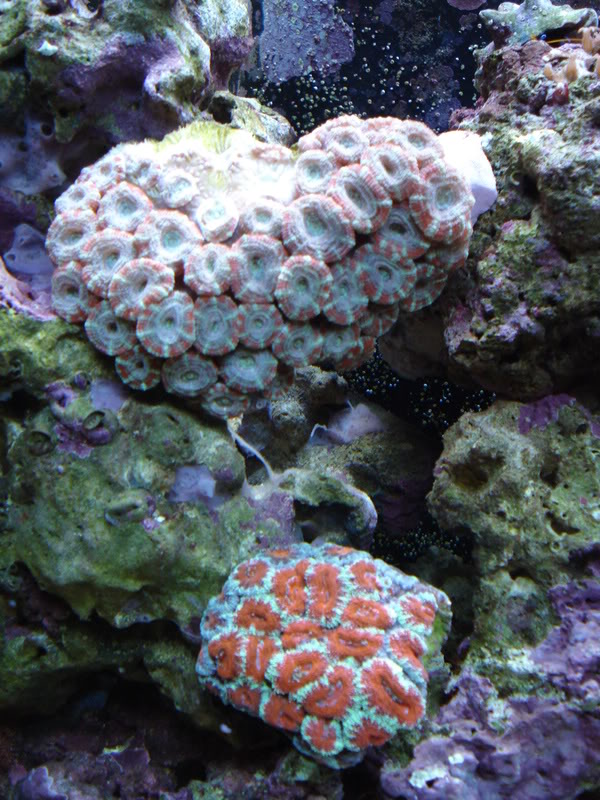
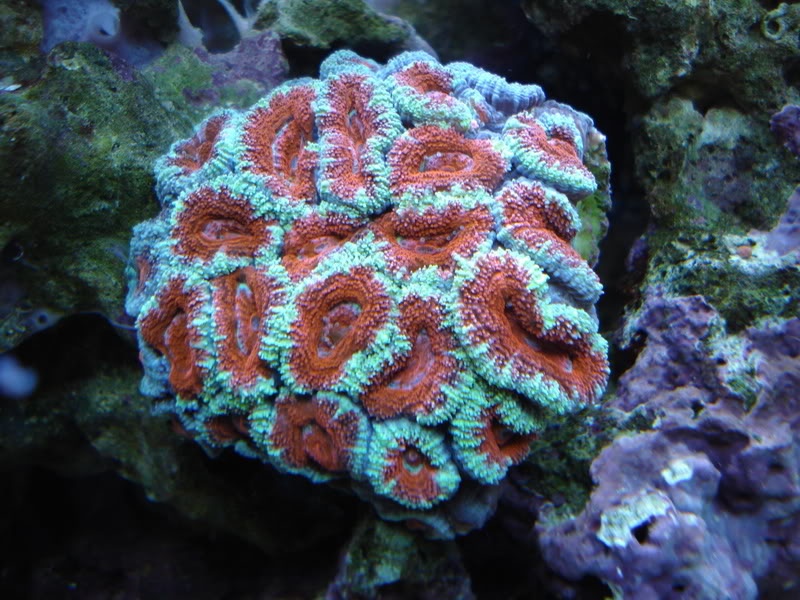
Another acanthastrea lordhowensis coral ![]() But now all of you coral guru's out there.....I have a question. If both of these are acanthastrea lordhowensis, why are they so different? If you look at the top coral, it's polyps are all circular in shape but the bottom (red) one's polyps are not so well defined.....what's the deal?
__________________
If you can't run with the big dogs - stay on the porch! ***Adopt a retired greyhound *** |
|
|
|
|
|
#2 (permalink) |
|
Aquarium Advice Freak
Join Date: Sep 2006
Location: Washington State
Posts: 389
![]() |
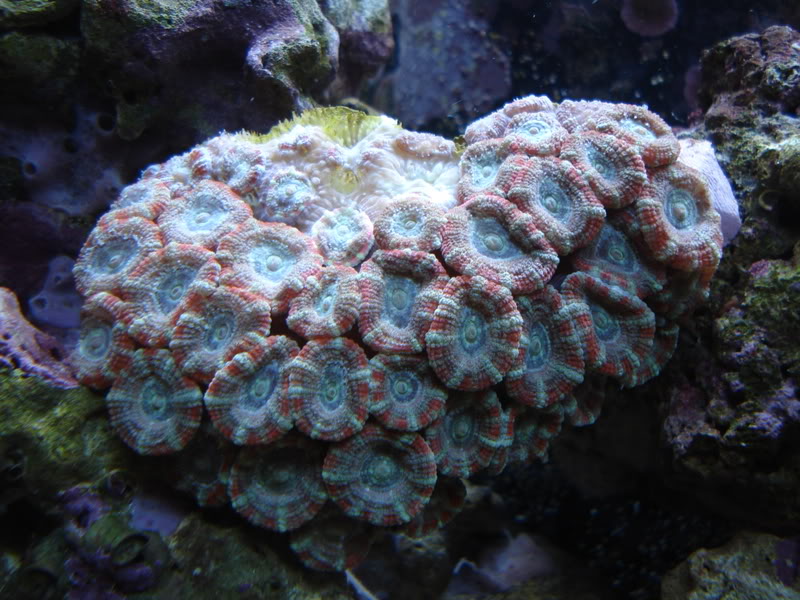
A better close up of the corals.....see what I mean? I swear they are different.
![]() ![]()
__________________
If you can't run with the big dogs - stay on the porch! ***Adopt a retired greyhound *** |
|
|
|
|
|
#5 (permalink) | |
|
Aquarium Advice Freak
Join Date: Sep 2006
Location: Washington State
Posts: 389
![]() |
Quote:
They have a good selection......if you buy them first, then there will be less for me! Whew!!
__________________
If you can't run with the big dogs - stay on the porch! ***Adopt a retired greyhound *** |
|
|
|
|
|
|
#7 (permalink) |
|
Aquarium Advice Addict
Community Mentor
|
Those are really nice colonies. They make my single polyp frags looks dismal
You may want to check out the article Good Lordhowensis!! by Eric Borneman and Anthony Calfo... "Acanthastrea is a relatively large genus in the family Mussidae, and contains 12-15 species. With the exception of A. maxima, all of them may be found in the areas where coral collection for the aquarium trade occurs. Acanthastrea species are not easy to distinguish from species in several other genera, and even families, of corals. They resemble other mussid corals, specifically Micromussa, Mussismilia, Symphyllia and Lobophyllia. They also resemble some of the many species in the family Faviidae that may be very difficult to tell apart.... In general, the mussids are corals characterized by large corallites with large teeth or lobes on their septa. The corallites generally have well developed columellae. In terms of knowing if a living specimen is a mussid, it is possible to see or gently feel the septa for the presence of these large and often serrated-looking teeth. If they are not present, it is quite possible that it is a faviid and not a mussid. But, actual identification requires examination of a skeleton devoid of tissue, and most mussids and faviids are covered with heavy tissue that nearly completely obscures their skeletons' diagnostic features. If the coral is determined to be a mussid, species identification requires measuring its corallites across their diameter from wall to wall. Micromussa, which looks very much like some species of Acanthastrea, has corallites 8mm or less in diameter. Acanthastrea generally has corallites smaller than Lobophyllia, and most have corallites between 8-15mm in diameter. Several species, though, may have larger corallites and these are the ones most difficult to distinguish from Lobophyllia and Symphyllia."

__________________
Click here to Vote for Aquarium Advice on AquaRank . Vote EVERY day! Click Here for a list of commonly used acronyms and abbreviations. ____ Cmor |
|
|
|
|
|
#8 (permalink) | |
|
Aquarium Advice Freak
Join Date: Sep 2006
Location: Washington State
Posts: 389
![]() |
Quote:
__________________
If you can't run with the big dogs - stay on the porch! ***Adopt a retired greyhound *** |
|
|
|
|
|
|
#9 (permalink) |
|
Aquarium Advice Addict
Community Mentor
|
They are already looknig better. Now I just have to be patient and wait fot them to grow. I hope I didn't place them too close to each other, but it will be fun fragging them later
__________________
Click here to Vote for Aquarium Advice on AquaRank . Vote EVERY day! Click Here for a list of commonly used acronyms and abbreviations. ____ Cmor |
|
|
|
|
|
#10 (permalink) |
|
Aquarium Advice Addict
Community Mentor
|
Cmor's article kind of hit on what I was wondering... are they the same species, or is the more "open" looking one (the one NOT from liveaquaria) really and for true an acan? It's coloration sure looks like one, but it really does seem more "open".
What I've noticed with my little colony as it's grown is that the new heads along the outside definitely seem to look a little different than the ones all crowded in towards the center. Looking at your pictures, I wonder if it might have to do with what constraints were on the coral where it was growing in the wild. I mean... if it was fairly well constrained and it didn't have room to spread, I can see where the polyps would pack themselves in pretty tight. But if they were in a place where they could spread out, it seems like they would so they could take advantage of more room to expand and collect light. So maybe the more open one was just from a location that had a lot of room to grow, and the other wasn't? Just armchair marine biologist-ing. |
|
|
|
![]() |
| Thread Tools | Search this Thread |
| Display Modes | |
|
|